
Electromobility
Electric truck? Or diesel?
The future of commercial vehicles – is the electric truck already the better choice today?
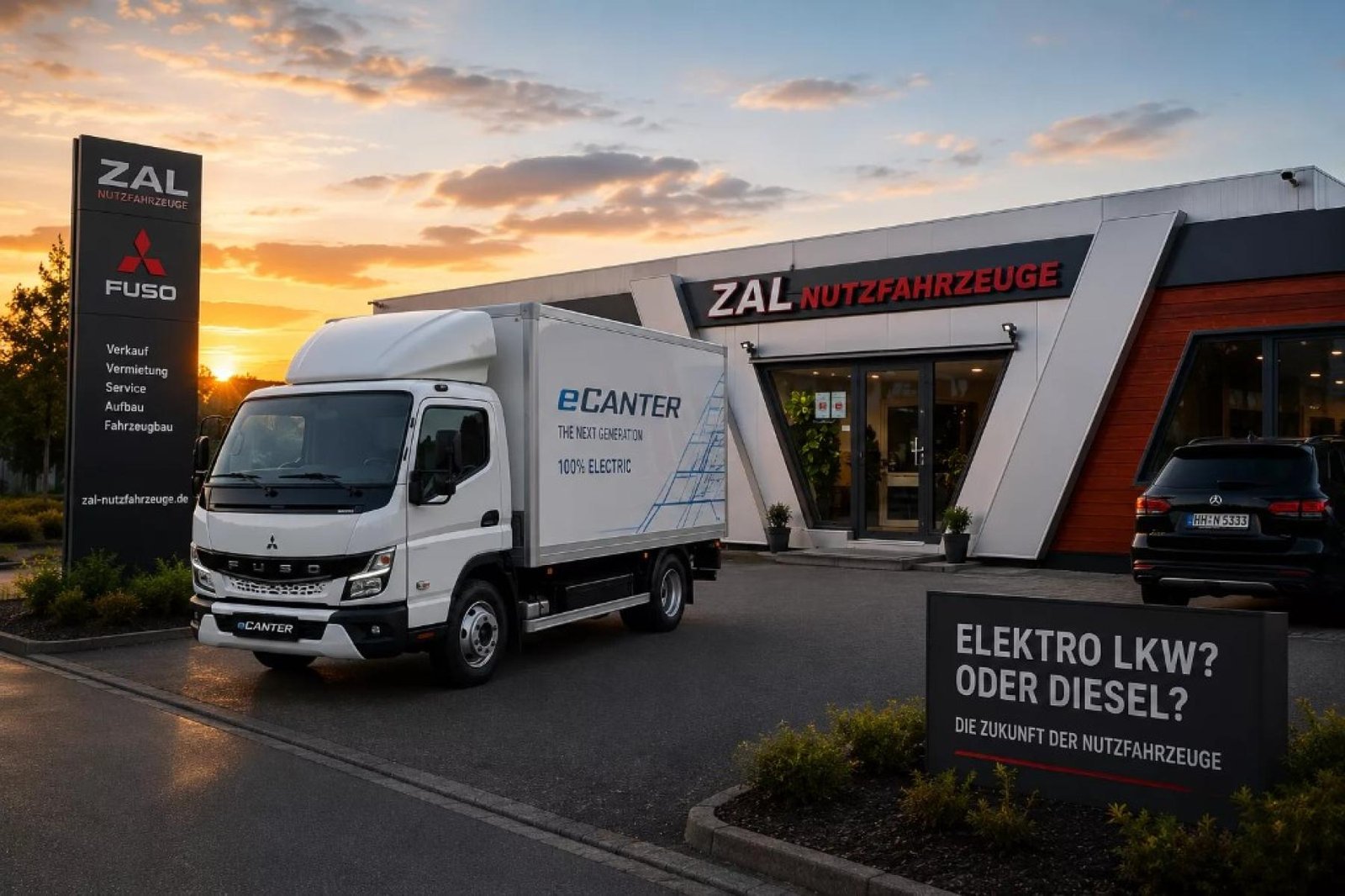
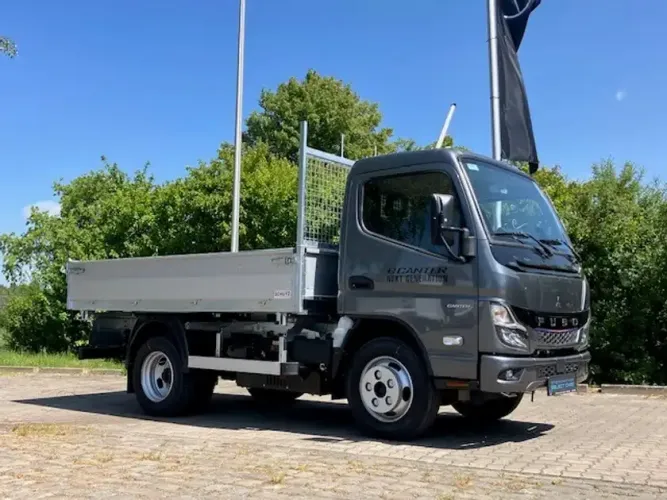
The transport industry is undergoing its biggest shift since the introduction of modern diesel engines. Rising fuel prices, stricter environmental rules, new inner-city concepts and technical progress mean more companies are considering electric commercial vehicles. At ZAL Automobile we are deeply engaged with this topic. Our first fully electric Mitsubishi Fuso Canter eCanter has already arrived. In the coming weeks another 16 vehicles will follow – including models with Palfinger cranes and various hookloaders.
But is an electric truck really worth it? Or is diesel still the better choice? We want to take an honest look at both drivetrain concepts.
Classic diesel – far from finished
Diesel has proven itself for decades. Its greatest strengths remain long range and fast refuelling. Especially in long-haul work or with changing daily routes, it is often still the most economical option. Anyone covering several hundred kilometres a day or lacking fixed charging infrastructure will often continue to rely on diesel for years to come.
Where the electric truck plays to its strengths
Regional operations look very different. Many trade businesses, municipalities, landscaping companies, utilities and service providers run fixed daily routes and return to the depot in the evening. That is exactly where the electric truck shines. The vehicle charges overnight and starts the next morning with a full battery.
Key advantages include:
- nearly silent operation
- no local CO₂ emissions
- lower energy costs
- less wear thanks to the electric drivetrain
- a more pleasant drive with instant torque
Range – often better than its reputation
Many buyers ask about range first. In practice, range is often overestimated. Most light commercial vehicles cover clearly less than 200 kilometres per day. For many municipal, construction-site or service uses, modern electric trucks already offer enough range. What matters is not maximum range, but the real duty cycle. If you return to the depot every evening, you usually do not need 600 kilometres of range.
Electricity or diesel – what does a kilometre cost?
Operating costs are especially interesting. A diesel truck incurs regular maintenance for oil changes, filters, exhaust aftertreatment and complex engine technology – on top of fuel. An electric vehicle has far fewer moving parts. Energy costs can also be substantially lower, especially with on-site power or photovoltaics. True economics still depend on several factors:
- annual mileage
- electricity price
- diesel price
- charging windows
- funding options
- residual-value trends
Every company should therefore look at its total cost of ownership – not only the purchase price.
Payload needs a close look
The battery adds kerb weight at first. At the same time, many manufacturers design vehicles to keep payload as high as possible. Whether a vehicle offers enough payload always depends on the later use case. Daily heavy building-material transport sets different requirements than a municipal yard or service fleet.
Charging instead of refuelling
Many operators imagine charging as more complicated than it is. With a fixed site, the truck can charge overnight and be fully ready again in the morning. For many businesses, night charging even replaces the previous filling-station stop.
Insurance and tax
Insurance and vehicle tax also deserve a closer look. Tariffs can differ significantly by insurer, so comparing offers pays off. Electric vehicles currently benefit from statutory tax advantages. Regional funding programmes or investment grants can make the purchase more attractive as well.
Our experience with the Mitsubishi Fuso eCanter
With our first Mitsubishi Fuso eCanter we are currently gathering daily operating experience. What stands out is how uncomplicated the vehicle is to drive. Instant torque makes for pleasant handling – especially in city traffic or on short routes with many stops. In the coming weeks we will expand our stock by another 16 vehicles, including body variants with Palfinger cranes and hookloaders, so we can offer customers even more targeted solutions.
We will share our experience regularly on our blog – openly covering advantages, challenges and practical findings.
Our conclusion
The future does not belong exclusively to the electric truck – but it will become clearly more electric. Diesel remains indispensable in many areas. At the same time, there are already many use cases where an electric truck is more economical, quieter and more sustainable.
The decisive question is therefore not “electric or diesel?” but “which drivetrain fits my operation?” That is exactly the question we want to answer with you. Get in touch, visit us and try it for yourself.
Susan Brög